


Mob Wars LCN: Mafia Empire RPG
4.51.49K Reviews
App Specs
- Version
- 3.136.2
- Updated On
- License
- Free
- Downloads
- 5,000,000+
- Developer
- Kano Games
- Categories
- Role Playing
- Platform
- Android
Screenshots
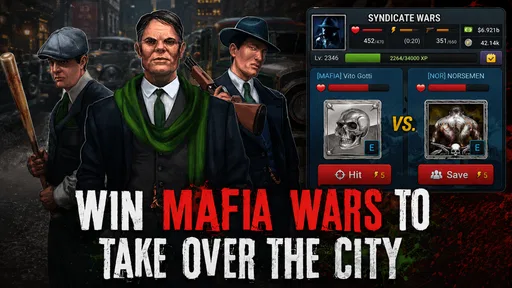
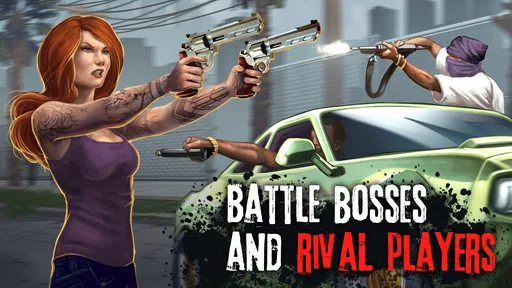
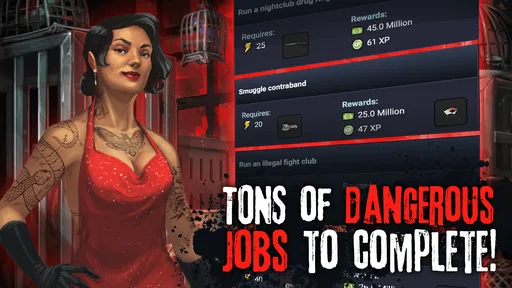

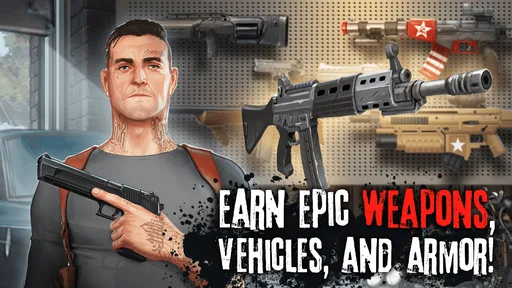
 Analysis by AppCompare
Mob Wars LCN: Mafia Empire RPG is the kind of role-playing game I open when I want a quick dose of criminal-underworld strategy rather than a long cinematic adventure. It puts me in charge of building a mob, challenging rivals, and expanding an empire through a compact mobile format. The basic idea is easy to understand, but the appeal comes from deciding where to spend limited attention: strengthening my character, improving my organization, or pushing into another confrontation.
What stood out to me first is how clearly the game knows its identity. It is not trying to be a realistic crime simulator or a huge open-world action game. Instead, it presents mafia ambition through menus, missions, upgrades, rivalries, and steady progression. That makes it approachable on a phone, especially for players who like checking progress several times during the day. At the same time, the structure can feel repetitive if I am looking for constant visual action or a story that moves dramatically from scene to scene.
The game comes from Kano Games and sits firmly in the role-playing category. It is free to start, aimed at a Teen audience, and supports devices running Android 7.0 or later. Its current version is 3.136.2, so anyone installing it should expect the experience to be maintained as an ongoing mobile title rather than treated like a finished one-time purchase.
A compact crime world with a clear visual identity
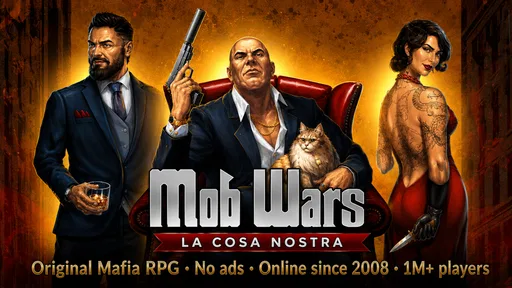
The first impression depends less on technical spectacle and more on presentation. The mafia setting gives every screen a shared purpose: territory, status, money, loyalty, and rivalry all belong to the same fantasy. I never felt that the game was borrowing a random theme for decoration. Its interface and progression are built around the idea of climbing through an organized criminal world, which helps even simple actions feel connected.
That consistency matters because this is a menu-driven RPG. When a game relies heavily on panels, buttons, timers, and upgrade choices, atmosphere can easily disappear behind administration. Here, the criminal framing gives those decisions a little personality. Choosing what to improve or which rival to challenge feels more meaningful when I view it as managing a growing operation rather than merely filling upgrade bars.
I also appreciate that the setting leaves room for my imagination. The game does not need to animate every meeting or show every confrontation in detail. The names, objectives, artwork, and progression structure suggest the larger scene, while I fill in the gaps. That approach will appeal to players who enjoy role-playing through decisions and status, but it will be less satisfying for anyone who expects an interactive action film.
The art direction works best when I treat it as functional storytelling. It establishes a recognizable underworld mood and keeps the interface from feeling completely abstract. However, the same economy has a downside: the experience does not deliver the visual variety of a fully animated crime adventure. If your ideal mafia game involves driving through a city, aiming weapons, or watching elaborate cutscenes, this is a very different proposition.
Worth Reading Before You Choose

EA SPORTS FC Mobile 26 Is a Bigger Football Game, but It Takes Time

Flipboard Shows What News Apps Must Do Beyond the Feed

Switching to Android Auto Means Rethinking Your Driving Routine

Google Calendar Makes a Crowded Week Easier to Manage

Ludo King Makes the Most of the Minutes Between Plans

Baby Panda World Brings Quick Play to Modern Phones, but Its Game Library Feels Busy
Why the setting helps the progression make sense
One of the more useful things I noticed is that the theme gives context to otherwise familiar role-playing routines. In many mobile RPGs, upgrading a statistic can feel like maintenance. Here, improving a mob or preparing for a rival encounter fits the fantasy of building influence. That does not remove the underlying repetition, but it makes the repetition easier to accept.
I found this especially useful during short sessions. If I only have a few minutes, I can make a couple of decisions and leave with the sense that my organization has moved forward. The game does not require me to settle into a long narrative scene before progress becomes visible. For a phone game, that is a practical strength.
There is also a trade-off in this design. Because the atmosphere depends on the surrounding role-playing framework, I need to pay attention to the progression rather than expect the setting to carry everything by itself. The crime theme is a strong wrapper, but the long-term interest comes from how I manage advancement and rivalry. Players who dislike incremental systems may run out of patience even if they enjoy the subject matter.
Sound, pacing, and the feeling of running an operation
The mood of a mafia game is not created by artwork alone. Sound and pacing have to support the idea that I am overseeing something larger than a single character. In my experience, the best moments come when the presentation gives a decision enough weight to feel like part of an ongoing operation, even though the actual interaction remains simple.
This is not a game I would choose for a soundtrack-led experience. Its appeal is more about the rhythm of checking in, choosing an action, watching progress develop, and returning with a new decision. That slower cadence suits the idea of building influence over time. It also makes the game easy to fit around ordinary routines, although it can feel less exciting during stretches where the next meaningful choice is not immediately available.
A realistic everyday use case is a short break between tasks. I might open it while waiting for an appointment, review what my mob needs, handle an available objective, and close the game without losing the thread. Later, I can return and continue from that same management mindset. It works better for this pattern than for a single uninterrupted evening of intense play.
The pacing also affects how I judge the game’s atmosphere. A fast action title creates tension through movement and reaction. Mob Wars LCN creates it through anticipation: whether an upgrade is worth the cost, whether I should strengthen before confronting a rival, and whether a small gain now helps my longer plan. That tension is quieter, but it matches the management-focused fantasy.
My main caution is that quiet pacing can become routine. If I want every session to produce a dramatic event, I may find the game too measured. I would recommend it more readily to someone who enjoys gradual accumulation and repeated strategic check-ins than to someone who needs constant novelty.
How the role-playing systems fit the mafia fantasy
The central mechanical question is whether the role-playing structure supports the criminal-empire idea. For me, it does, because the game connects personal advancement with the broader goal of building a mob and dominating rivals. I am not simply improving an isolated hero; I am trying to make the organization more capable and more influential.
That distinction changes how I approach decisions. Rather than spending everything as soon as I receive it, I think about whether an improvement helps immediate survival or contributes to a stronger long-term position. This is one of the more important habits I developed while playing: treat every upgrade as part of an operating plan, not as an automatic purchase.
A useful workflow is to decide what kind of session I am having before I start. If I only have a moment, I focus on collecting progress and handling the clearest available task. If I have more time, I compare possible improvements and consider whether a rival encounter is sensible now or better postponed. This simple separation prevents me from making rushed choices just because a button is available.
The game is also more comfortable for players who like visible advancement than for those who want deep character role-playing in the traditional tabletop sense. The fantasy is expressed through growth, competition, and management. I get a sense of becoming more powerful through the organization I build, but the experience is not primarily about freeform dialogue or exploring a richly branching narrative.
That makes comparison with other role-playing games important. Compared with an action RPG, this title asks for less reflexes and offers less moment-to-moment spectacle. Compared with a traditional strategy game, it places more emphasis on character and mob progression within a themed world. Compared with a story-heavy adventure, it gives me more repeatable management and less dramatic storytelling. I would choose it when I want the middle ground between role-playing progression and light strategic planning.
Free entry, optional spending, and sensible expectations
The game is free to download, which makes it easy to test whether its pacing suits me before committing money. It includes optional purchases ranging from $1.99 to $99.99 per item. That price spread is important because the game’s gradual structure can make convenience tempting, particularly when I want to advance faster or avoid waiting for progress.
My advice is to decide early whether I am comfortable with the normal pace. If I enjoy the decisions themselves, the free starting point is enough to explore the core loop. If I find myself feeling pressured to buy simply to make the game enjoyable, that is a sign the format may not match my preferences. Spending can change the pace, but it does not transform the game into a different genre.
I would also avoid treating every available improvement as equally urgent. The more useful approach is to identify the bottleneck in my current plan. If my problem is weak performance against rivals, I should think about preparation rather than buying random upgrades. If my problem is inefficient progress, I should review how I am allocating resources before assuming that spending is the answer. This keeps the management side meaningful.
Players wondering whether the game is suitable for younger children should note its Teen content rating. The mafia setting and criminal themes are central to the experience, so I would not recommend it simply because it is easy to operate on a phone. It is better suited to teenagers and adults who are comfortable with that subject matter and with optional in-app purchases.
Who will enjoy it, and who should choose something else
I think this is a good fit for players who like mafia fiction, incremental progression, and competition that develops over repeated sessions. It is particularly convenient for someone who enjoys checking a game briefly throughout the day rather than needing a long, uninterrupted play session. The clear theme gives routine decisions more flavor than they might have in a generic upgrade game.
It is also a solid choice for people who enjoy making cautious plans. The most satisfying moments are not necessarily the loudest ones; they come from preparing properly, improving the right part of the organization, and seeing that preparation pay off against a rival. I found that the game rewarded patience more than impulsive tapping.
I would skip it if I need real-time combat, open exploration, or a heavily cinematic story. I would also look elsewhere if I dislike games built around repeated check-ins and gradual progress. A conventional action RPG will offer more direct control, while a deep strategy title may provide more complex systems and larger-scale decision-making. This game’s strength is its focused mafia wrapper and accessible mobile rhythm, not maximum depth in either direction.
Another point worth considering is attention style. The game can be a pleasant background hobby, but it may not satisfy players who want a single definitive campaign with a strong ending. Its appeal comes from continuing to build, compete, and improve. I enjoy that ongoing structure, but I understand why someone might prefer a self-contained adventure instead.
Practical habits that make the experience better
My first recommendation is to avoid playing every session with the same goal. Alternating between progress collection, preparation, and rivalry keeps the management loop from becoming mindless. It also makes it easier to notice whether I am actually improving my position or merely reacting to whatever option appears first.
Second, I would keep a clear distinction between short-term rewards and long-term strength. A quick gain can be useful, but not if it leaves the mob poorly prepared for the next serious challenge. Thinking in terms of the whole operation is more rewarding than chasing the most visible number on the screen.
Third, I would use the game as a deliberate break rather than an automatic habit. Opening it with a small plan—such as checking progress, making one improvement, and deciding whether to engage a rival—helps preserve the role-playing feeling. Without that intention, the experience can collapse into routine maintenance.
Finally, I would test the free experience honestly before considering purchases. Since the game is designed around ongoing advancement, I need to know whether I like its normal rhythm. If I do, optional spending becomes a personal convenience decision. If I do not, paying will not solve the underlying mismatch.
My verdict on the atmosphere and the long-term loop
Mob Wars LCN: Mafia Empire RPG succeeds because its setting, artwork, and progression point in the same direction. The game makes menus and upgrades feel like parts of a criminal organization, while its measured rhythm supports the fantasy of gradually building influence. It is not a substitute for an action-heavy mafia game, but it does not need to be one.
The audience response suggests that the format has lasting appeal: it holds a 4.5 average from around 13 thousand ratings, with roughly 1.5 thousand written reviews and over 5 million installs. Those figures do not change my personal experience, but they do place the game among established mobile role-playing choices rather than an obscure experiment.
What I like most is the way it turns short phone sessions into small management decisions. I can play around daily responsibilities, return to an evolving mob, and make progress without needing to memorize a complicated action system. What limits it is the same thing that gives it identity: the slower, repeatable structure may feel too restrained for players who want constant drama.
My final recommendation is simple. Try it if the idea of building a criminal empire through steady role-playing choices sounds more appealing than shooting your way through a city. Give it time to show whether its pacing fits your habits, and be deliberate about optional purchases. For me, Mob Wars LCN: Mafia Empire RPG is at its best as a compact, atmospheric management RPG: easy to revisit, coherent in tone, and rewarding when I approach each move as part of a larger plan.
Pros
- Strategic combat rewards careful planning rather than constant tapping.
- Large criminal empire offers plenty of long-term progression goals.
- Guild activities add teamwork and extra reasons to return daily.
- The gritty mafia theme is consistent across menus
- missions
- and events.
- Runs smoothly on most modern phones with modest storage requirements.
Cons
- Energy limits can interrupt missions when you want to play longer.
- Some upgrades take a long time unless you spend premium currency.
- The interface feels dated compared with newer mobile RPGs.
- Progress may feel repetitive after completing similar missions repeatedly.
- Competitive players can gain a noticeable advantage through in-app purchases.
FAQs for Mob Wars LCN: Mafia Empire RPG
What is Mob Wars LCN: Mafia Empire RPG?
Mob Wars LCN: Mafia Empire RPG is a browser-style crime strategy game for mobile devices in which you build a criminal empire, complete jobs, fight rival players, collect income, and expand your influence. Progress depends on managing energy, stamina, health, weapons, properties, and crew members. The game combines role-playing elements with competitive multiplayer systems and a persistent online world.
How do you progress quickly in Mob Wars LCN?
The most reliable way to progress is to balance jobs, combat, property income, and equipment upgrades instead of spending all resources in one area. Completing missions helps unlock content, while properties provide recurring cash and stronger weapons improve your performance in fights. Joining an active family or crew can also provide useful bonuses, protection, and opportunities to participate in group events.
Is Mob Wars LCN: Mafia Empire RPG free to play?
Mob Wars LCN can generally be downloaded and played without an upfront purchase, but it may include optional in-app purchases. These purchases can provide premium currency, energy, stamina, special items, or other progression advantages. You can enjoy the core gameplay for free, although patience and careful resource management may be necessary if you choose not to spend money.
Does the game require an internet connection?
Yes, Mob Wars LCN is designed as an online multiplayer experience and normally requires an active internet connection. Your progress, battles, properties, events, and interactions with other players are handled through the game’s servers. Because of this, offline play is limited or unavailable, and a stable connection is recommended to prevent synchronization problems or interruptions during important actions.
Is Mob Wars LCN suitable for all ages?
Mob Wars LCN focuses on organized crime, violence, rival gangs, weapons, and criminal activities, so its subject matter may not be appropriate for younger players. The game can also include competitive interactions, social features, advertisements, and optional purchases. Parents should check the current age rating, privacy information, and store listing before allowing children or teenagers to download and play it.


